Achieving World-Class ITSM Support at Barts Health NHS Trust
Read the Success Story
 +44 (0)203 479 7900
 +1 612 416 2177
 +61 (0)2 8880 9500
 +64 (0)4 488 7481
Built for Police, Fire & Rescue and Ambulance services
Emergency Services ITSM software is secure, resilient service management built for the critical technology that public safety depends on. Alemba Service Manager helps Police, Fire & Rescue and Ambulance organizations manage incidents, changes, assets, suppliers, knowledge and service performance across control rooms, stations, vehicles and frontline devices, on one governed, always-on platform.






Emergency Services ITSM software is IT service management designed for the critical technology and operational services used by Police, Fire & Rescue, Ambulance and other Blue Light organizations. It provides structured tools for incident, request, change, problem, asset, knowledge, supplier and service-level management, so the systems behind every response stay available, governed and quick to restore.
Behind every emergency response is a network of control rooms, communications, mobile data terminals, clinical systems, vehicles, stations and suppliers that must work around the clock. When one fails, the impact can reach far beyond an ordinary IT outage. Alemba Service Manager gives emergency services one platform to respond rapidly to disruption, control change safely and reduce the likelihood of repeat failures.
Blue Light organizations run complex, always-on estates under tight governance and budget pressure. Service management has to keep pace.
Control rooms, radio networks, station connectivity and mobile devices must stay available 24 hours a day. Teams have to spot critical incidents immediately, engage the right specialists and suppliers, and restore service fast.
Command and control, computer-aided dispatch, mobile data terminals, body-worn devices, clinical and vehicle systems all interrelate. Understanding those relationships is essential when assessing incident impact or a proposed change.
Records relating to the public, investigations, vulnerable people and medical information must be tightly controlled, with every action, approval and change fully traceable for audit and information governance.
Maintaining service quality with limited specialist resource means routine requests and avoidable, repeated incidents cannot be allowed to consume skilled technical capacity.
Responses often span Police, Fire, Ambulance, local government, healthcare and external suppliers. Without a shared, structured approach, issues get passed around with no clear ownership or complete view.
Officers, firefighters, paramedics and field technicians rarely work from a fixed desk. They need simple ways to report issues, request equipment, attach photos and get updates from stations, vehicles and the field.
ASM brings IT and wider business services together, so frontline personnel get support through a single route instead of chasing separate systems, inboxes and phone numbers.
Work is prioritized by operational impact, urgency and public safety. Incidents affecting command and control or emergency communications can be recognized, escalated and managed differently from lower-impact administrative issues.
Alemba's partitioning keeps each function's data, workflows and permissions separate within one platform, with role-based access, while still allowing collaboration across teams and agencies when needed.
Adapt forms, approvals, SLAs and workflows through visual, no-code configuration as legislation and operational needs change, without relying on costly bespoke development. Extend it with service management automation.
Connect identity, monitoring, asset discovery, collaboration, HR and finance systems through the integration platform, including Microsoft Teams, to support end-to-end service automation across the estate.
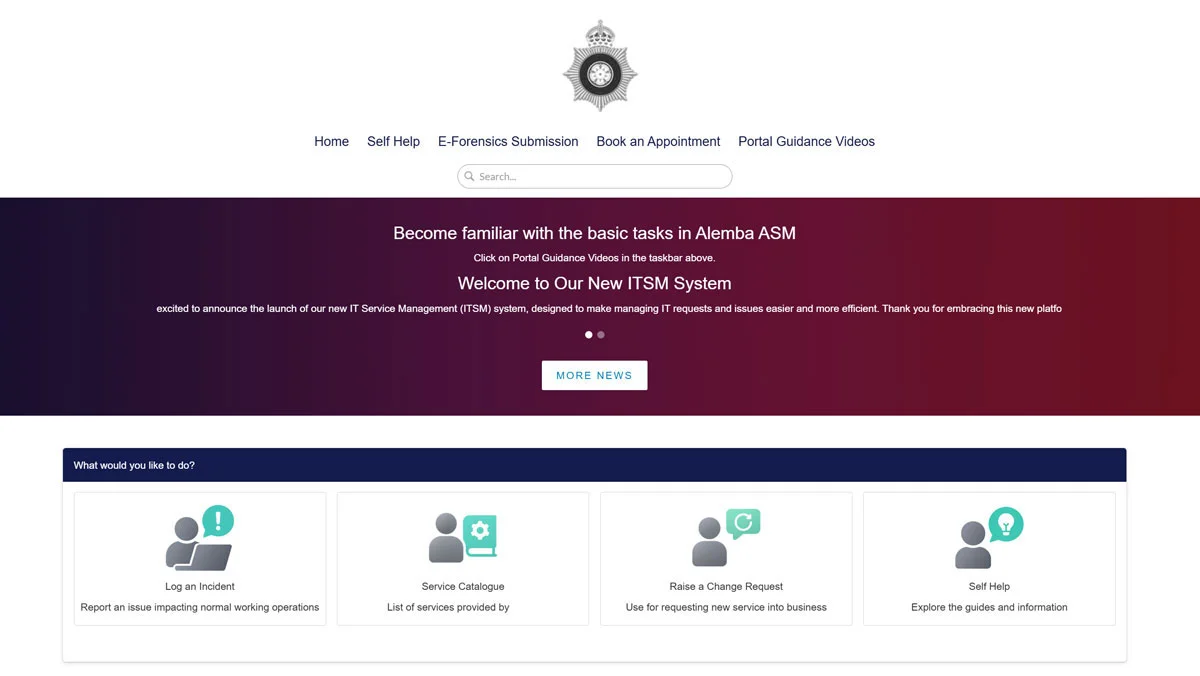
One branded portal for IT, HR, Estates, Fleet and more. Dynamic forms present only relevant questions, so requests are quicker to raise and easier for teams to action.
Purpose-fit capability for high-availability, highly regulated, geographically dispersed operations.
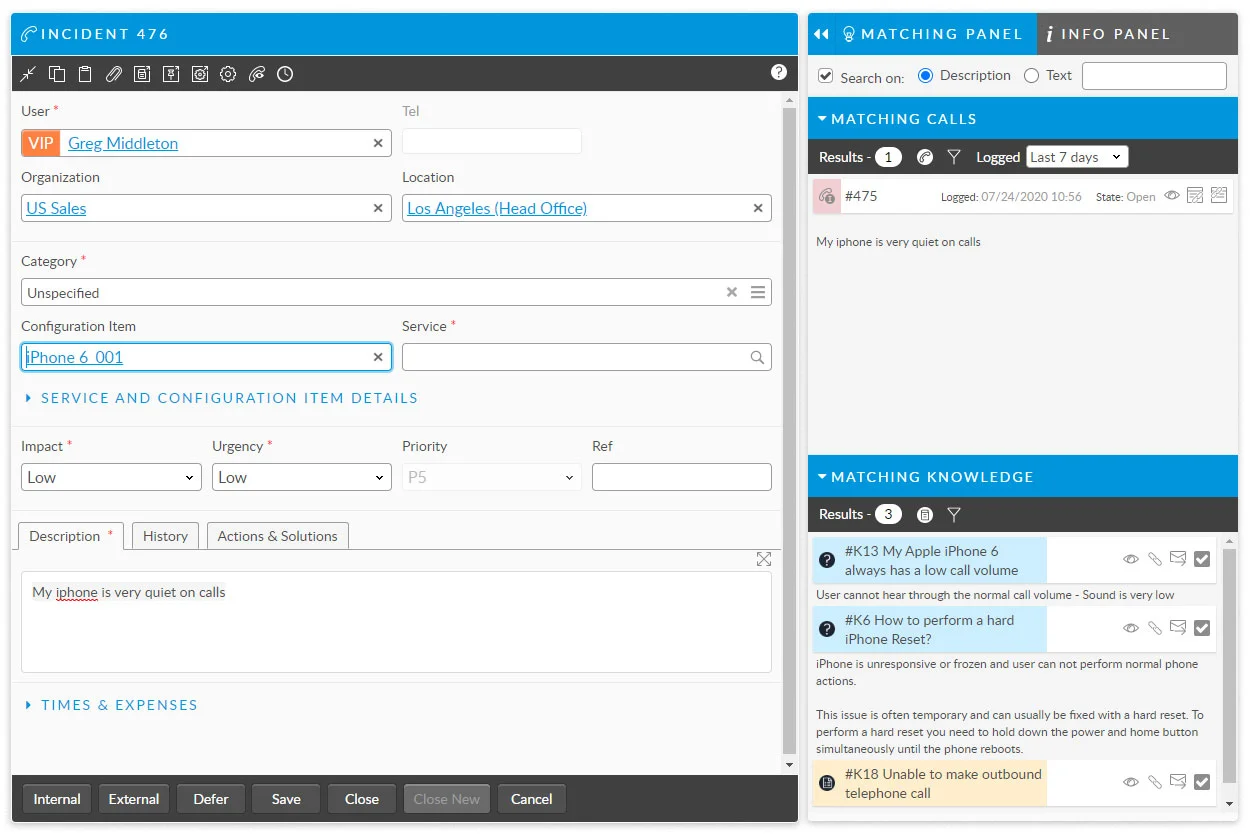
Log, prioritize, assign and escalate quickly. Critical incidents can automatically trigger major incident workflows based on the affected service, location, impact or urgency, with parent and child links to avoid duplicated investigation.
Configurable workflows for risk assessment, technical and operational approval, CAB review, emergency change, testing and back-out planning, with a change calendar that flags conflicts and operationally sensitive periods.
AI supports categorization, priority, assignment, summarization, sentiment analysis, duplicate detection and knowledge recommendations, while keeping human oversight of safety-critical decisions. See AI in Alemba Service Manager.
Move from firefighting to removing root causes. AIOps spots patterns in operational data and highlights recurring issues, while known errors and workarounds are published to problem management and knowledge for fast restoration.
A central view of systems, communications equipment, mobile devices, vehicles, stations, applications and suppliers. Visual relationship mapping shows what an incident or change will affect. See CMDB.
Separate clocks for customer commitments, internal operational agreements and supplier contracts, with automated warnings and escalations before targets are missed, and real-time dashboards.
A branded self-service portal and chatbot give the whole workforce one route to support with no per-user portal license fees. Dynamic forms and a service catalog keep requests clean.
Role-based permissions, partitioning, knowledge profiles and complete audit histories protect sensitive operational and personal information, with every significant action recorded for governance and audit.
Responsive interfaces let officers and technicians log requests, attach photos, receive updates and complete assigned work from stations, vehicles and operational locations.
Useful articles and guides on ITSM for Blue Light and critical public services.
For emergency services, the quiet work of IT, HR and Estates teams is anything but background. A look at why service management matters when the stakes are highest.
Read article →How ITSM tools help emergency services deliver faster, more reliable IT support behind frontline operations.
Read article →ASM is available on the G-Cloud 14 framework, making it straightforward for public sector and Blue Light organizations to procure.
Read more →Emergency Services ITSM software is a service management platform built for the critical technology and operational services used by Police, Fire and Rescue, Ambulance and other Blue Light organizations. It provides structured tools for incident, request, change, problem, asset, configuration, knowledge, supplier and service-level management.
Yes. Priorities, workflows and escalations can be driven by operational impact, urgency, affected service, location and configuration item. Incidents affecting command and control or emergency communications can automatically trigger major incident procedures and management notifications.
Yes. The Alemba self-service portal is license-free. Officers, firefighters, paramedics, control room staff, volunteers and corporate personnel can log requests, search knowledge and track progress with no per-user portal license fees.
Yes. Alemba Service Manager supports Enterprise Service Management across HR, Estates, Fleet, Finance, Procurement, Facilities and other enabling services. Each department can keep its own forms, workflows, teams, permissions and service targets on one shared platform.
Alemba Service Manager can use AI to assist with categorization, priority, assignment, summarization, sentiment analysis, duplicate detection, knowledge recommendations and suggested next actions, while keeping human oversight of operational and safety-critical decisions.
Yes. Alemba provides connectors, APIs and an integration platform to exchange data with identity services, monitoring tools, asset discovery products, collaboration platforms, HR systems and finance systems, creating or updating records and triggering workflows.
Alemba Service Manager keeps traceable histories of activities, communications, approvals, assignments and configuration changes. Role-based security, partitioning and configurable workflows help emergency services demonstrate consistent, controlled handling of incidents, changes and requests.
Yes. Partitioning, role-based access, separate workflows and controlled data visibility allow shared-service arrangements or collaborating organizations to operate on one platform while keeping sensitive records and configuration data appropriately separated.
See how Alemba Service Manager helps Police, Fire & Rescue and Ambulance services restore critical services faster, strengthen governance and give frontline teams one simple route to support.
Request a demo